

The process of remodeling a bathroom can be challenging, especially if you have not previously handled an interior project. A bathroom remodel is not only about making the bathroom appear attractive. It can affect your quality of life, cleanliness, and even your health. Many homeowners are concerned about the cost and timeframes, as well as making mistakes that are difficult to rectify in the future. This guide will help you remodel your bathroom straightforwardly and easily. It will guide you through budgeting, planning, and the bathroom renovation procedure step-by-step. The tips are practical and based on actual remodeling scenarios, such as homes located in humid and warm areas, like Florida. At the end of the course, you will be able to comprehend the entire procedure and begin your project without having to do any further study.
What Is Bathroom Remodeling?

Bathroom remodeling involves changing the way the bathroom looks, operates, and functions. It may include replacing outdated materials, repairing layout issues, or upgrading the systems, such as lighting and plumbing. Remodeling often resolves problems that repairs cannot fix, such as inadequate ventilation or outdated wiring. Many bathrooms were constructed years ago and do not meet contemporary standards. Remodeling can bring the bathroom into the modern day. It also enhances security and comfort. In humid areas, remodeling often focuses on controlling moisture and using durable materials. Understanding what bathroom remodeling signifies helps homeowners plan their projects wisely and avoid spending money on temporary solutions.
What Does a Bathroom Remodel Include?
A bathroom remodeling project typically includes the floors and fixtures, walls, and storage. Plumbing lines can be fixed or replaced if they are damaged or improperly installed. Electrical wiring is typically modernized to enhance safety and improve lighting. Improvements in ventilation are commonly used to reduce odors and moisture. Certain remodels also incorporate layout modifications to facilitate movement and storage. Each remodel differs, but the majority include visible and concealed work to protect the home in the long run. Knowing what is included in the remodel can help homeowners set their budgets and timeframes with greater precision.
Bathroom Remodeling vs Bathroom Renovation
Renovation and remodeling of bathrooms can be confusing, however, they are two distinct things. Remodeling alters the way that the bathroom is constructed or functions. The focus of the renovation is on the appearance, including fixtures and paint. Remodeling costs more but fixes deeper problems. Remodeling is quicker, but it may not last as long.
Benefits of Remodeling a Bathroom
Remodeling enhances safety, comfort, and everyday usage. Additionally, it enhances the value of your home and helps mitigate maintenance issues. Well-designed bathrooms tend to last longer and are more comfortable to use daily.
How to Start a Bathroom Remodel
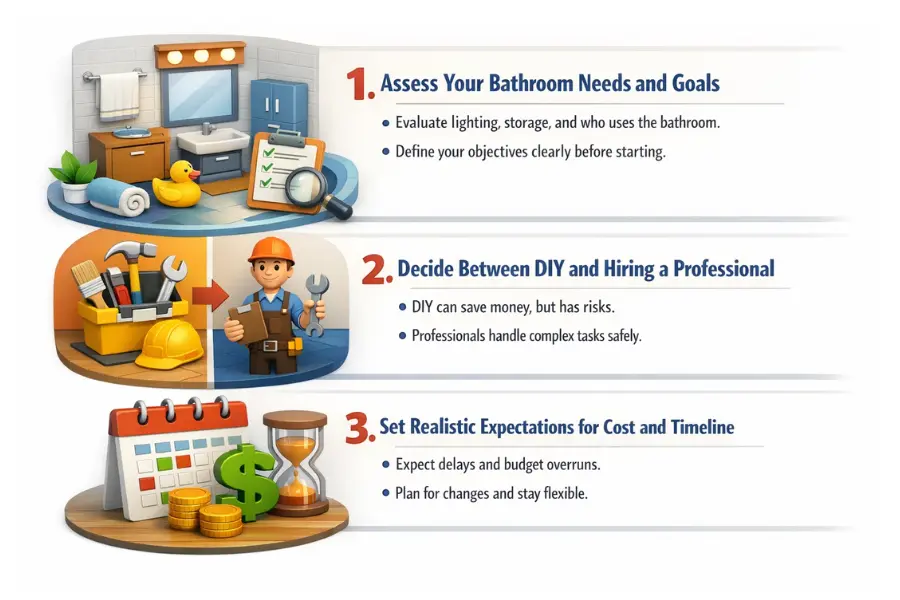
Starting a bathroom remodeling correctly can save time and money. Many projects are ruined because homeowners rush into demolition without a clear goal. It begins with understanding what you are trying to change and the reasons behind it. Certain bathrooms require better lighting. Some bathrooms require safer flooring or storage space. Documenting issues can help determine the best course of action in the future. Beginning with clear objectives helps keep the project on track and reduces tension during the construction phase. A positive start can set the tone for the rest of the remodeling.
1. Assess Your Bathroom Needs and Goals
Examine how the bathroom is used daily. Consider issues such as poor lighting, insufficient storage space, or water staining. Consider who uses the bathroom, and how often. Consider your future needs as well. Clearly note down your objectives before making a purchase. This will help avoid making unnecessary modifications later on and help keep the cost in check throughout the entire project.
2. Decide Between DIY and Hiring a Professional
DIY bathroom remodeling could be a great way to save money, but it increases the responsibility. Simple tasks such as painting or changing fixtures are typically risk-free. Electrical and plumbing work is more complicated and risky. In various areas, including Florida, licensed professionals are required to perform specific tasks. The right choice will protect your family’s safety and home.
3. Set Realistic Expectations for Cost and Timeline
Bathroom remodeling is usually longer and is more expensive than anticipated. There are delays due to inspections or material shortages. Setting realistic expectations can reduce frustration and allow you to remain in control, even if your plans change.
How to Plan a Bathroom Remodel
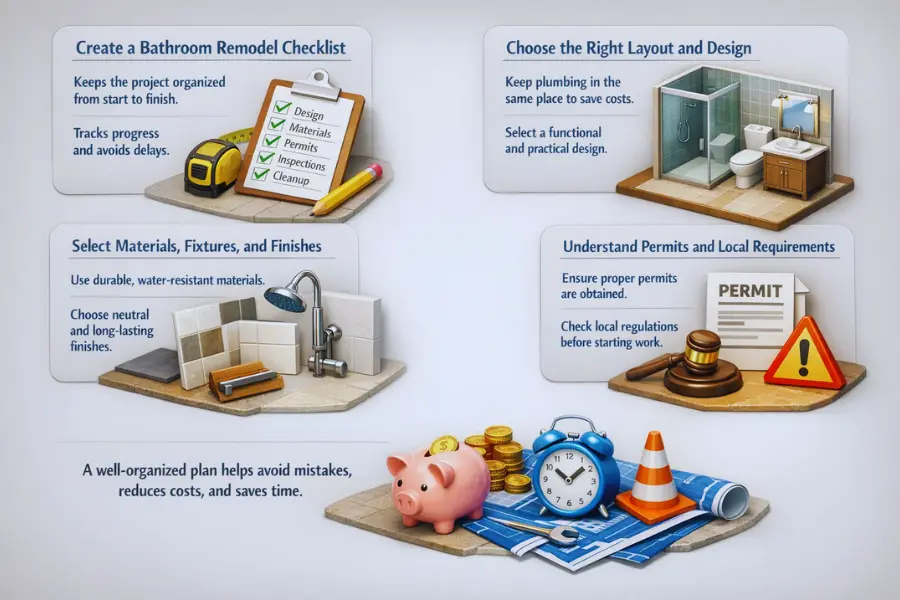
Planning is the foundation of a successful bathroom remodeling project. A solid plan can prevent errors and help maintain order and efficiency. The planning process involves designing choices, determining budgets, obtaining permits, and scheduling. Without a plan, expenses can increase rapidly, and timelines are longer than anticipated. A clear and well-organized plan helps homeowners make informed decisions and prevent last-minute changes. A well-planned plan also helps reduce the amount of work and waste, which reduces time and money.
Create a Bathroom Remodel Checklist
A checklist will keep the project organized from start to finish. It includes design choices, material orders, permits, inspections, and cleanup. A checklist can help avoid the wrong steps that could lead to delays. It also assists in tracking the progress and keeps everyone at the same level during the remodeling.
Choose the Right Layout and Design
The layout affects comfort and usability. Placing plumbing in the same place helps save time and money. Simple designs are often more effective than complicated designs. Select a design that complements the space and accommodates regular use without overcrowding.
Select Materials, Fixtures, and Finishes
Select materials that are resistant to wear and water. The more durable finish lasts longer and requires less care. Neutral colors last longer and attract more customers. Good-quality materials may cost more upfront, but they save money in the long run.
Understand Permits and Local Requirements
Bathroom remodels typically require permits for electrical and plumbing work. In the event of omission, it could result in fines or even legal issues related to resale. Be sure to check the local regulations before beginning work.
Bathroom Remodeling Process Explained (Step-by-Step)
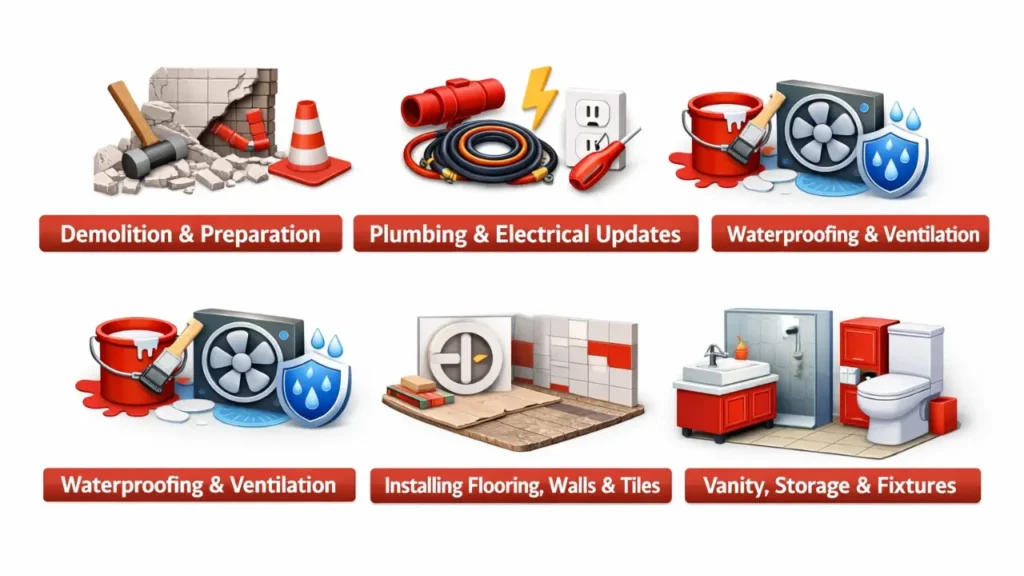
This section outlines the process of bathroom remodeling in a clear and straightforward sequence. Each step is dependent on the previous step. Inadvertently removing steps or changing the order can lead to errors and additional expenses. This process is an effective way for homeowners to track progress and avoid confusion. Although every remodel will be different, the majority follow this general pattern. Understanding the process at each step will make the whole project easier to oversee.
Demolition and Preparation
Tiles, fixtures, and other items are carefully removed. The floors and walls may be opened to inspect for any hidden damage. This can reveal issues such as mold or leaks. A thorough preparation process ensures that the bathroom renovation is constructed on solid ground.
Plumbing and Electrical Updates
The plumbing lines are repaired and replaced as required. Electrical wiring is updated to ensure security and modern lighting. The work must comply with the code’s requirements. Inspections typically occur during this phase, before the walls are sealed.
Waterproofing and Ventilation
Waterproofing safeguards floors and walls from damage caused by moisture. Ventilation eliminates moisture from the air. This is particularly essential in humid climates and can help prevent mold growth over time.
Installing Flooring, Walls, and Tiles
Walls and floors are installed carefully, with proper spacing and alignment. The tiles are sealed to avoid damage from water. A well-installed tile will last for a long time and provide the appearance of a polished surface.
Vanity, Storage, and Fixture Installation
Showers, vanities, toilets, and sinks are put in next. Storage is beneficial for everyday use and organization. Fixtures are inspected for leaks and function.
Final Touches and Quality Check
Mirrors, paint, and lighting complete the room. The entire bathroom is tested and inspected. The final cleaning is done to prepare the bathroom for use.
How to Remodel a Bathroom Yourself (DIY Guide)
DIY bathroom remodeling can be done efficiently if it is done properly. It requires planning, patience, and realistic expectations. DIY projects are great for doing surface repairs, not complicated systems. Be aware of your limitations to prevent injuries and risks to your safety. An effective DIY method can save money while delivering excellent results.
Tools and Materials Needed for a DIY Bathroom Remodel
The most basic tools include drills, levelers, and tile cutters. Security gear is vital. High-quality tools make working more efficient and secure. Utilizing the right materials can prevent early failures.
What You Can Safely Do Yourself
Tiling, painting, or replacing fixtures are all typical DIY jobs. These tasks require care and patience. Always adhere to safety and instructions guidelines.
When to Call a Professional
Certified experts must perform the electrical and plumbing work. This will protect your property and meet the legal standards.
Common DIY Bathroom Remodeling Mistakes to Avoid
The omission of permits, the rush to work, or not waterproofing properly can cause serious problems later on. A plan can prevent these mistakes.
How Much Would It Cost to Remodel a Bathroom
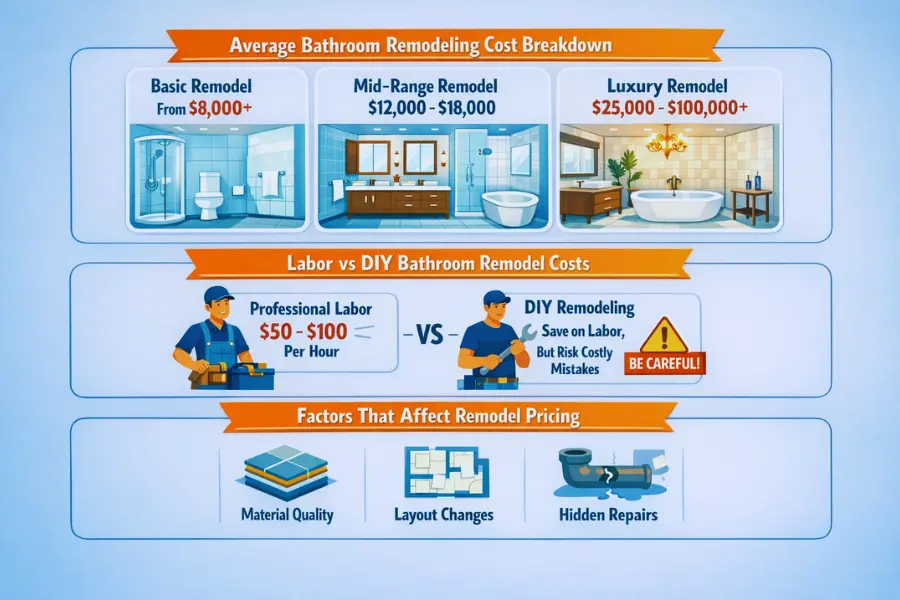
The costs for bathroom remodeling vary based on the dimensions, materials, and the amount of labor required. In Florida, prices are often based on materials that are resistant to moisture and permit specifications. Knowing the real cost helps homeowners make better plans for their homes. Costs vary from simple updates to extravagant renovations. Understanding the factors that influence pricing helps manage the budget effectively.
Average Bathroom Remodeling Cost Breakdown
In Florida, bathroom remodeling projects typically start with a cost of $8,000, even the smallest ones. Mid-range remodeling usually costs between $12,000 and $18,000. The price of a luxury car can range from $25,000 to $ 100,000. Labor is a significant cost component.
Labor vs DIY Bathroom Remodel Costs
Professional labor typically costs between $50 and $100 per hour. DIY can reduce labor costs; however, it also adds responsibility. Making mistakes can quickly wipe out savings.
Factors That Affect Bathroom Remodel Pricing
Materials quality, layout modifications, and hidden repairs have the most significant impact on the final cost.
How to Budget and Estimate a Bathroom Remodel
Budgeting ensures that the project is in check. A well-planned budget will include permit fees, materials permits, and additional money. Many homeowners underestimate the cost of their home. A realistic budget eases anxiety and makes decisions more sensible.
How to Create a Realistic Bathroom Remodel Budget
Set a spending limit for the entire year. Include a buffer of ten percent to cover unexpected expenses. Be sure to plan your purchases carefully to avoid overspending.
How to Estimate Materials and Labor Costs
Get multiple local quotes. Compare rates and timeframes. Include inspection and permit fees.
Hidden Costs to Plan for in a Bathroom Remodel
The hidden damage, repairs for mold, or temporary solutions may cost you more than expected.
How to Remodel a Bathroom Cheap (Money-Saving Tips)
Renovating on a budget can be done with a few smart decisions. Making money doesn’t mean cutting quality. Be focused on quality and longevity, rather than chasing trends.
Affordable Material and Fixture Choices
The standard materials are less expensive and are more affordable to replace. Simple fixtures can reduce labor time.
Reuse and Refurbish Existing Bathroom Elements
Refinishing cabinets and refinishing tubs helps save money. Keeping layouts avoids plumbing changes.
Innovative Ways to Cut Bathroom Remodeling Costs
Shop for sales, compare quotes, and do small jobs yourself if you can.
How Long Does It Take to Remodel a Bathroom
Bathroom remodeling timelines are based on the complexity and size of the project. Setting realistic timeframes will help minimize stress and interruptions.
Typical Bathroom Remodel Timeline
Smaller remodels typically take between 7 and 10 days. Complete remodels typically take 2 to 3 weeks to complete. Large projects could take as long as 4 weeks.
How Project Size and Scope Affect Time
Layout modifications, inspections, and repairs can take time. Customized materials can also prolong timelines.
DIY vs Contractor Timeline Comparison
DIY projects can take longer. Bathroom Remodeling Contractors are faster and work more effectively.
Conclusion
The process of remodeling a bathroom can be daunting at first, but with the proper strategy, it can be both manageable and enjoyable. If you know how to renovate your bathroom step by step, you can avoid costly errors and stress. A properly planned bathroom remodel increases comfort, safety, and provides long-term value. If you decide to renovate your bathroom on your own or hire experts from ‘renew painting & remodeling’, having a solid plan, sensible budgeting, and realistic timeframes will make a significant difference. Be patient, select high-quality materials, and focus on the quality of your work. A properly renovated bathroom will serve your family for many years to come and make living more enjoyable.
Frequently Asked Questions About Bathroom Remodeling
Can You Remodel a Bathroom Yourself?
Yes, minor upgrades are possible. Plumbing and electrical work often require the expertise of professionals.
What Is the Most Expensive Part of a Bathroom Remodel?
Labor and plumbing are usually the most expensive.
Do You Need a Permit to Remodel a Bathroom?
Yes, permits are required for most plumbing and electrical changes.