

A kitchen remodel is exciting on paper until it becomes stressful midway through. I see this time and time again, including when demolition jumps the gun, promptly followed by budget problems, delays, and design regrets. Most of these problems come from poor planning, not bad intentions.
And that’s where a Kitchen Remodel Checklist actually makes quite a difference. It keeps things in order and helps one make the right moves in the proper sequence. This guide will walk you through the whole process, as I would with my own clients, to ensure you’re prepared before renovation work begins.
What Is Kitchen Remodelling?
A kitchen remodelling guide defines the process of creating a new appearance, atmosphere, and efficiency for your kitchen. It could be a minor remodeling project consisting of renovations of the cabinets and lighting fixtures. Planning is very important before you start breaking anything. You need to think about the cost, which is the money you will spend. You also need to think about the time, or how many days it will take. You have to make many decisions, such as choosing colors and tools. If you plan well in advance, you will avoid big problems later, and your new kitchen will turn out perfect.
How to Create a Kitchen Remodel Checklist
A checklist helps you slow down and plan appropriately. Instead of guessing what to do next, you break the project into clear stages. It keeps the process simple and controlled. Always prepare before speaking with contractors. Decide what matters most to you and write it down. Separate your needs from your wants. Keeping notes avoids confusion later and makes kitchen remodel planning smoother from start to finish.
The Ultimate Kitchen Remodel Checklist
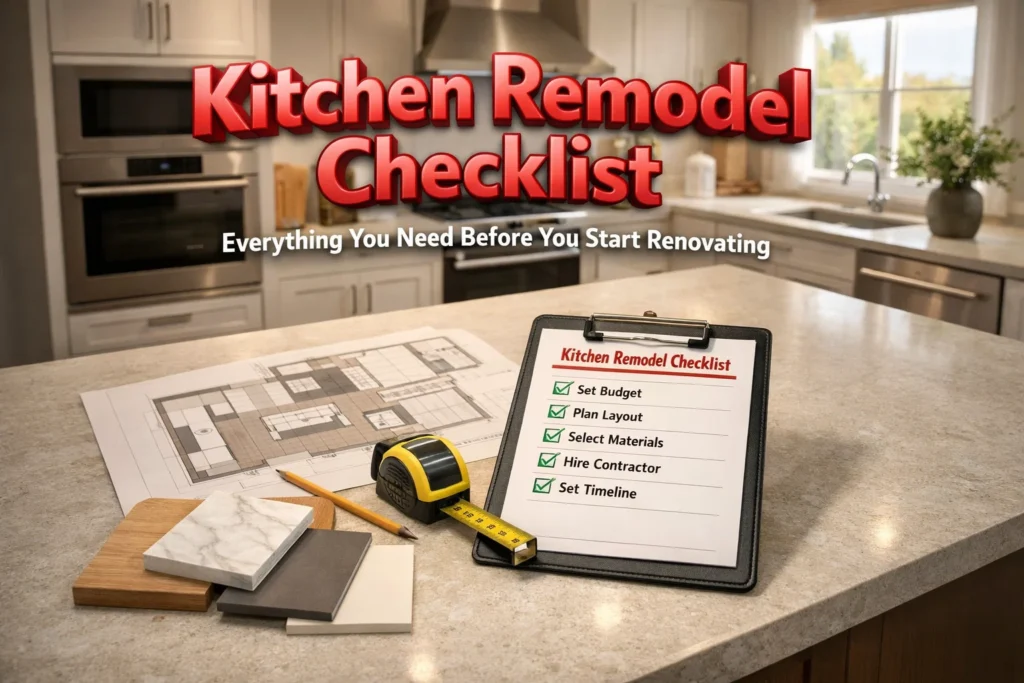
Before starting any renovation work, having a clear and organized plan is essential. A kitchen remodel involves many moving parts, and missing even one step can lead to delays or extra costs. The checklist below outlines the most important items to prepare, decide, and confirm to ensure your remodeling project runs smoothly from start to finish.
1. Define Your Remodelling Goals
Before proceeding with your kitchen work, take some time to reflect on the reasons for the change. Do you need more storage, a better layout, or simply a new look? Having a clear goal prepares you to make wise choices and avoid unnecessary spending.
Consider your kitchen usage. Are you someone who prepares food most of the time or just occasionally grabs small meals? It will help you determine which kitchen features are essential.
Identify your primary needs and desires. For instance, bigger cupboards would be a must-have, whereas fancy lights would fall under the nice-to-have category. Such a list will serve as a guide for you and will make your kitchen remodeling steps much simpler.
2. Set a Realistic Kitchen Remodel Budget
When creating a new kitchen remodel timeline, it is necessary to consider where the money goes carefully. You will spend it on different groups or categories, such as new cupboards, floors, and paint. Some money goes toward the materials and things you buy, and some toward the labor, which pays the workers for their help.
Occasionally, things do not go according to plan, and you may have to buy things that you forgot or need now. It is the reason why you should have an Emergency Buffer, which is a small amount of extra money, around 10-20% saved separately. This additional money helps you handle unexpected issues, so you can complete the kitchen remodel budget without stress.
3. Plan Your Kitchen Layout
First, you pick a kitchen shape. You can have an L-shape or a U-shape, because they look like the letters L and U. You can also have a Galley, which is two straight rows, or an Island, which is a big counter in the middle. These shapes help you keep everything organized and make the kitchen easy to use. A good kitchen layout includes a Work Triangle. It is an invisible triangle that connects the fridge, sink, and stove so you can move around quickly. You also need space for walking. It means leaving enough open space so people can walk in the kitchen without bumping into each other.
4. Measure Your Space Properly
To make sure everything fits, you have to measure your kitchen carefully. Use a ruler or tape to measure the wall lengths and the height of the ceiling from the floor. You also need to mark where the windows and doors are so you don’t block them with new cupboards. Last but not least, leave enough appliance space for the fridge and stove so they can slide into their spots easily without being too tight.
5. Choose Cabinets
Cabinets define storage and style. Stock cabinets are quick and affordable. Semi-custom options offer better sizing. Custom cabinets give complete control but cost more. Instead, one should consider storage options such as pull-out shelves and soft-close drawers. Good cabinet choices enhance daily use, not just appearance.
6. Select Countertops
When choosing a countertop, pick the right material for your kitchen. You can use either Quartz or Granite, both powerful stones. Or you can select Laminate because it is smooth and comes in a variety of colors. There is also a Butcher Block made of thick wood. Pick one based on how strong it is and how easy it is to clean and keep looking new.
7. Pick Appliances Early
It is very important to pick your appliances first so that they fit in your kitchen. First, measure your fridge to make sure it is not too big. Then, choose your stove, like one that uses fire or electricity. You also need space for a dishwasher to wash your plates and a fan to take out smoke when you cook.
8. Plan Lighting and Electrical
To make your kitchen bright and safe, you need to plan your lighting and electrical outlets. Use big lights to light up the whole room and small lights where you chop food. You can also put little lights under the cupboards to see better. Finally, make sure there are enough plugs for your toaster, blender, and other kitchen things.
9. Choose Flooring
When you pick a floor, you can choose Tile, Vinyl, or Hardwood. Kitchen floors should withstand spills and high traffic. There are a lot of kitchen design ideas on the internet, you can also take some for your kitchen. Tile floors are a very durable choice, and the fact that vinyl is water-resistant and can be acquired at a very low cost is a considerable advantage of Kitchen Remodeling. Choose a flooring that is easy to clean and meets your lifestyle requirements.
10. Select Backsplash and Wall Finishes
The backsplash is the wall behind your stove and sink. Use materials that are easy to clean, such as smooth tiles, so that you can wipe away food splashes or grease quickly. Also, pick colors that match your countertops so your kitchen looks pretty and neat.
11. Hire the Right Contractor
To get the best help, first talk to a few Kitchen Remodeling Services and check their prices to see who is the best. Make sure they have a license and insurance, so you know they are real experts and can work safely. Finally, always have a written contract. This paper outlines the plan and rules so everyone knows what to do.
12. Create a Remodel Timeline
Making a new kitchen takes time, so you need a timeline. First is the planning phase. This is when you draw your ideas and pick your colors. Next is ordering materials. This means buying everything and waiting for it to come to your house. Last is the construction phase. This is when the builders put everything together. It is like waiting for your birthday. It takes some time, but the result is really great.
13. Prepare Your Home for Renovation
Before the builders arrived, the home was made ready. A small temporary kitchen was set up in another room with a microwave, snacks, and easy food. Meals could still be eaten while the central kitchen was under construction. The furniture and floors were covered with big cloths or plastic sheets to keep them clean and safe. All plates, cups, and pans were removed from the cabinets to give the workers clear space to work.
Other Helpful Kitchen Renovation Tips
- Order materials early to avoid delays.
- Avoid changing designs once work starts.
- Communicate daily with your contractor.
- Expect dust and noise during work.
- Plan meals to reduce stress.
These small actions follow smart kitchen renovation tips and make daily life easier during renovation.
Conclusion
A successful kitchen remodel begins with planning. Missed planning steps guarantee you a lifetime of hassles, costs, and delays. A Kitchen Remodel Checklist provides you with the planning, organization, and confidence you need to navigate each remodel phase successfully. Use this kitchen renovation checklist as a professional remodel guide and complete each step before demolition. Proper planning today translates to a kitchen you will enjoy for many years.